
Dentistry vs Pharmacy: Which Fits Your Armenia Study Plan?
Dentistry and pharmacy can attract students with overlapping interests, but the learning tasks and long-term routes differ. Compare the actual curriculum and qualification, then test each option against your strengths. In Armenia, confirm that the exact course and teaching language you want are available for your intake before making the choice.
By Study in Armenia Editorial Team · Published 7 October 2026 · Editorial review 7 October 2026
 Study in Armenia student guide
Compare dentistry and pharmacy through curriculum, practical training, personal fit, and the steps after an Armenian degree.
What dentistry asks you to learn
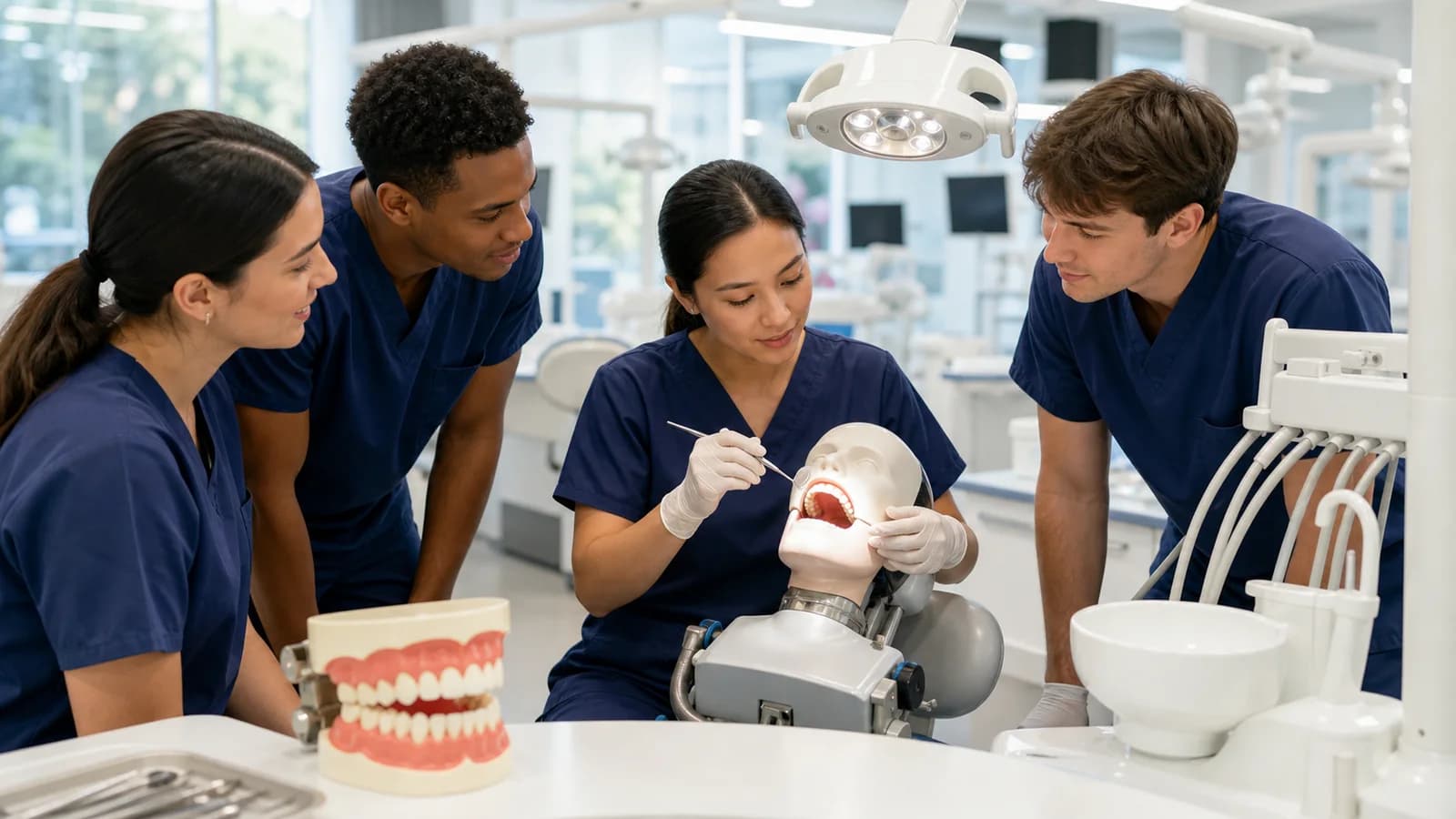
Dentistry combines oral biology, prevention, diagnosis and precise procedural work. Students need to understand the relationship between oral health and wider health while developing manual skills. When researching Armenian dental programmes, distinguish classroom teaching, simulation work and supervised treatment of patients; these are different stages of training.
Dentistry may suit you if you enjoy detailed hand work, close patient communication and repeated practice until a technique becomes reliable. Consider whether working in a small operating field for sustained periods appeals to you.
What pharmacy asks you to learn
Pharmacy studies medicines through chemistry, pharmacology, formulation and safe use. It asks how a substance acts, how it is prepared and how medicine-related decisions are communicated. For Armenia, compare the exact qualification and progression route; pharmacy titles and degree stages should not be assumed interchangeable across institutions or countries.
Pharmacy may fit students who enjoy chemistry and careful checking as well as conversations with patients or healthcare colleagues. Accuracy is central: a small calculation error can matter more than a polished presentation.
Compare the evidence of practical training
Ask about access to dental simulation units, infection-control training, instrument requirements and supervised clinical sessions. A photograph of a modern clinic is less useful than a clear description of the work students are assessed on and the feedback they receive.
Look for laboratory teaching, medication-safety exercises, calculations and supervised practice components. Ask whether placements emphasise community pharmacy, hospitals, manufacturing or a combination, and which activities international students may undertake.
Check the next step, not only the first year
Your route may involve general dental practice, postgraduate training, research or public oral-health work. Each regulated route has its own registration conditions. Request recognition advice from the regulator in the place you intend to practise, using the exact degree and awarding institution.
Possible directions include dispensing, pharmaceutical industry, quality assurance, regulatory work and further research. Some roles require professional registration; others require specialist technical skills. Check the distinction before treating all pharmacy careers as one outcome.
Use a small decision exercise
Choose one introductory task from each pathway: for dentistry, design a plain-language oral-health education leaflet for a fictional student audience. Separate sourced prevention information from claims about treatment and have an appropriate mentor review it. This tests communication and evidence selection without attempting dental procedures.
For pharmacy, create a mock quality checklist for a fictional laboratory batch, covering labelling, traceability and documentation. Explain what each check would detect. Keep the work educational; actual manufacture and dispensing require authorised facilities and supervision.
After both tasks, compare enjoyment, difficulty and your willingness to keep practising. Give more weight to the tasks you want to improve at than to the one you happened to find easiest. Then compare two available Armenian syllabuses using the same budget, admission and language questions.
Sources and verification
Verify current requirements and fees with the official institution or government source before applying.