Medicine vs Dentistry: Which Fits Your Armenia Study Plan?
Medicine and dentistry can attract students with overlapping interests, but the learning tasks and long-term routes differ. Compare the actual curriculum and qualification, then test each option against your strengths. In Armenia, confirm that the exact course and teaching language you want are available for your intake before making the choice.
By Study in Armenia Editorial Team · Published 7 October 2026 · Editorial review 7 October 2026
 Study in Armenia student guide
Compare medicine and dentistry through curriculum, practical training, personal fit, and the steps after an Armenian degree.
What medicine asks you to learn
Medicine brings together anatomy, physiology, pathology and clinical reasoning. The central task is learning to connect a patient history, examination and investigation results into a defensible care plan. It requires sustained scientific study and supervised patient contact, rather than an interest in biology alone. In Armenia, compare the actual progression from classroom learning to clinical rotations at each medical school.
You may enjoy medicine if you are curious about mechanisms of illness and can tolerate uncertainty, responsibility and lengthy training. Enjoying a science subject is helpful, but patience with people and the ability to accept corrective feedback matter just as much.
What dentistry asks you to learn
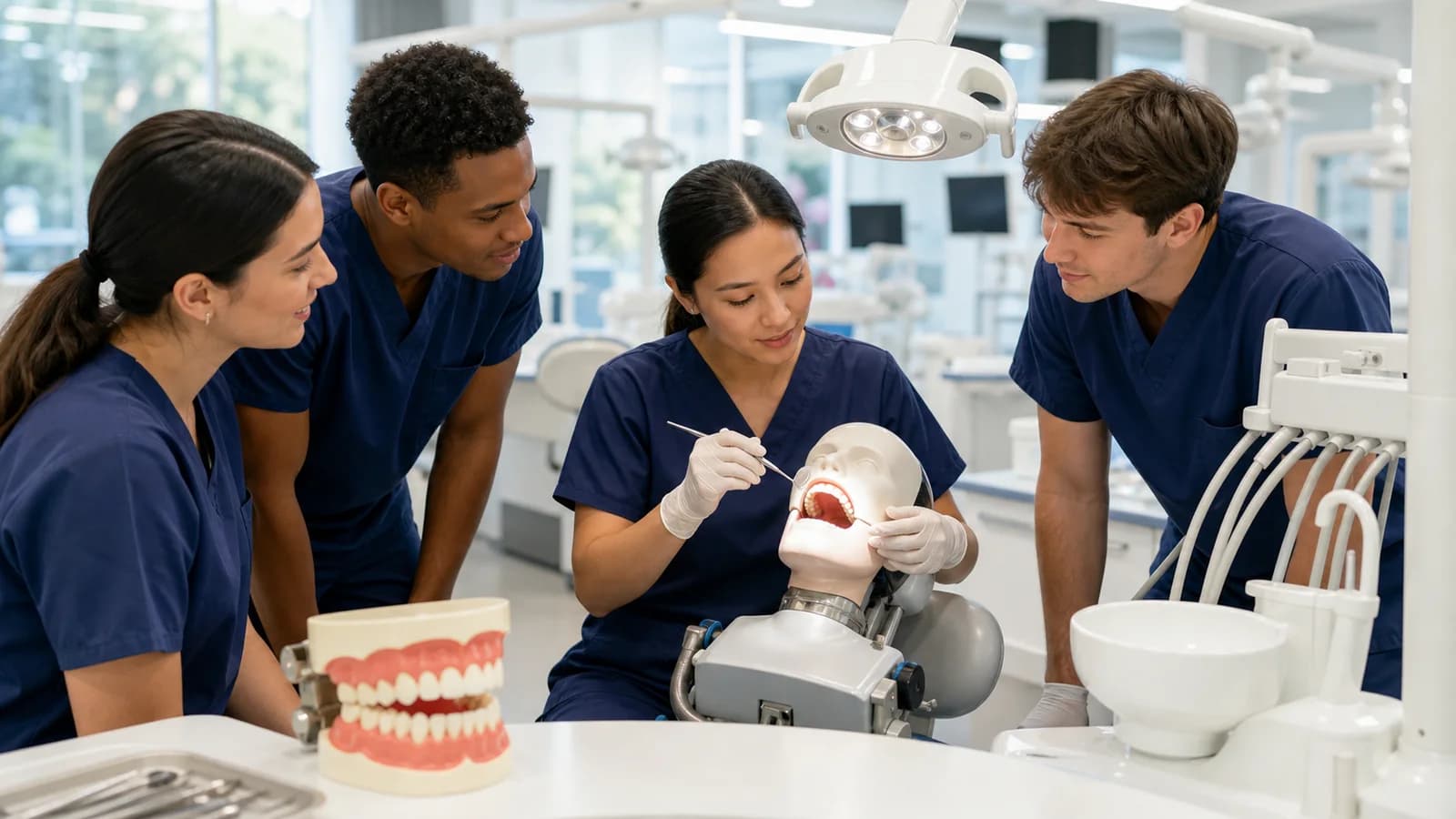
Dentistry combines oral biology, prevention, diagnosis and precise procedural work. Students need to understand the relationship between oral health and wider health while developing manual skills. When researching Armenian dental programmes, distinguish classroom teaching, simulation work and supervised treatment of patients; these are different stages of training.
Dentistry may suit you if you enjoy detailed hand work, close patient communication and repeated practice until a technique becomes reliable. Consider whether working in a small operating field for sustained periods appeals to you.
Compare the evidence of practical training
Look for simulation practice, supervised rotations, assessment of clinical skills and an explanation of how students communicate with patients. English instruction does not establish the language used in every clinical interaction. Ask who supervises each placement and how students record completed experience.
Ask about access to dental simulation units, infection-control training, instrument requirements and supervised clinical sessions. A photograph of a modern clinic is less useful than a clear description of the work students are assessed on and the feedback they receive.
Check the next step, not only the first year
A medical qualification is one step toward professional registration. Licensing authorities determine eligibility in each jurisdiction. Obtain their current requirements independently, including internship structure and language conditions; an institutional accreditation entry or a directory listing does not itself grant permission to practise.
Your route may involve general dental practice, postgraduate training, research or public oral-health work. Each regulated route has its own registration conditions. Request recognition advice from the regulator in the place you intend to practise, using the exact degree and awarding institution.
Use a small decision exercise
Choose one introductory task from each pathway: for medicine, build a learning exercise around a fictional patient history: identify missing information, explain competing hypotheses and list questions for a supervisor. Do not diagnose a real person or publish patient information. The useful outcome is a clear reasoning process, not a confident answer.
For dentistry, design a plain-language oral-health education leaflet for a fictional student audience. Separate sourced prevention information from claims about treatment and have an appropriate mentor review it. This tests communication and evidence selection without attempting dental procedures.
After both tasks, compare enjoyment, difficulty and your willingness to keep practising. Give more weight to the tasks you want to improve at than to the one you happened to find easiest. Then compare two available Armenian syllabuses using the same budget, admission and language questions.
Sources and verification
Verify current requirements and fees with the official institution or government source before applying.